Students walk into an eleventh grade history classroom in an
American high school. Today they are
learning about the Declaration of Independence, and how the US won independence
from Britain. The teacher instructs for ninety minutes, using the history
textbook and the Declaration of Independence as a document-based study. Afterwards, some of the students walk down
the hall to their English class. In
English they are studying the
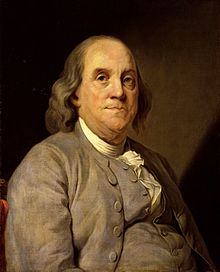
Autobiography
of Benjamin Franklin. However, this instruction is completely separate from
their related studies in their earlier class.
A few students make connections on their own, but most are just trying
to get through the long passages and don’t even realize the significant
relationship. These students are missing
the connections that a concurrent study of literature and history would allow
for—learning in context. History should be learned through this concurrent
study by using traditional readings and literature to gain greater
understanding of the events of the past.
Traditionally, history is taught through textbooks and the
writings of scholars. These scholars and
writers use newspapers, speeches, and other fact based primary sources to
compile a clear picture of what actually happened. This big picture allows for the reader to
make judgments about the people involved and to ask questions as to their
motivations. These texts are usually written in an objective manner, which
allows the reader to not be influenced by the writer’s personal views. By
reading a third person narrative, the reader gains knowledge of the event.
Reading a piece of literature based on historical events
also allows for learning. These pieces of literature can come in historical-based
fiction and first person narratives. Historical-based
fiction often requires the author to research the historical events to create
the setting for the characters that they will create. While the characters are
not actual people, when based in a historically accurate scene, the characters
create an idea of what it was like to be living in that time period. First person narratives are usually written in
the form of autobiographies, memoirs, etc. These narratives serve as a view to
what it was really like to live there.
By reading these different types of literature, the student can learn
more about the historical event, because the reader experiences the event—almost
first hand. As we read a story, we put
our own view into the story, which creates a text-to-person relationship. These text-to-person relationships allow for
learning to be more permanent in a student’s mind. First person narratives also allow for
anecdotes, while third-person historical narratives do not. These anecdotes allow for a student to
remember the events with more clarity. These stories give life to the history, because
we can picture what happened a long time ago even though it may be foreign to
us. With these connections, a student
can learn from a first person narrative or a historical fiction novel.

However, just learning from a history textbook or just
learning from a piece of literature leaves holes in the knowledge of the
subject. These two genres need to be
used together to create a complete package. Learning from a history textbook
gives historical context to the literature.
If one reads
The Killer Angels by
Michael Shaara, (a historical fiction novel about the Battle of Gettysburg
during the Civil War) and has never heard of Gettysburg, he/she might be lost.
However, if the student reads
The
Gettysburg Campaign: A Study in Command by Edwin Coddington, he/she now has
a context to read a great piece of literature in. Overall, the student now has a very clear
picture of what happened at Gettysburg and a wealth of knowledge of the events
that transpired there.
In addition, reading first person narratives along with
scholarly based narratives, allows for the facts to have a backing. Scholarly
based narratives, while often making attempts at unbiased writing, cannot help but
to be influenced. Sometimes, the
government might even have a say in what records are erased or kept. A first person narrative, though biased in
its own right, serves as a witness. No
one can completely disagree with someone’s experiences. By writing down memories, a permanent record
is created that cannot be erased later on down the road when a dictator wants
to “rewrite history” to fit what they need. As a result, first person and
scholarly based narratives together create a great framework for the truth.
Overall, the students at American high schools should not be
learning about the Declaration of Independence in one class and then turn
around to learn about the Autobiography
of Benjamin Franklin in a different class without at least a mention of the
other class. Greater understanding and
knowledge can be achieved by reading historical literature and scholarly-based
writing.

