Showing posts with label geography. Show all posts

Monday, November 11, 2013

Veteran's Day Lesson Plan

So with today being Veterans Day--I am doing a lesson plan with the soldiers today, last Friday, and this coming Wednesday (the days I have class).  I found a couple of things to do with the class...I wanted it to be a mini-lesson type of feel because we are in the middle of units right now.  So we are reading:

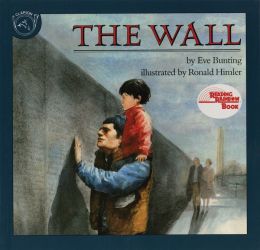
The Wall
Picture courtesy of barnesandnoble.com
I love this book because even though it is a children's story and high schoolers might go eh....but they seem to enjoy the sweetness of the story and I like that it doesn't feel like it was written for 6 year olds and it doesn't talk down to them.

We also watched a couple of videos.  Today's CNN Student News was very appropriate I thought and teenage related.  And ABC News from last Thursday was good...but I didn't watch the follow-up on Friday yet so I can't recommend that one. But I loved how both of these videos focus on not only the sacrifice of the veterans but their families--and that is what I really wanted to hit home for my kids.

What did you do today with your students?

Sunday, October 27, 2013

Utah Council of Social Studies Conference Wrap-Up

First off you have to know how much I love going to conferences. Being the only Social Studies teacher at my school, I need to go hang out with "my people" every once in a while.  And this is one is a tradition for me. Twice a year UCSS puts on a conference that is absolutely superb.  Why you ask?
http://www.ucssblog.com/
  1. It is on Saturday...it is hard to take a "day off" from school
  2. I always have three sessions that I can attend and learn something new
  3. And usually in these sessions I have at least one thing that I can use on Monday if I so chose
  4. Great people that present and great people to meet
I wanted to give you a little bit of how awesome my day was.  First I had the great opportunity to hear from a teacher who got her Master's in England and taught there for four years.  England does high school a little bit like I do in the fact that they only have class once sometimes twice a week....so she can only do the big topics like me.  England focuses A LOT on sources it sounded like.  This is something that I need to be doing more of! And I loved the advice and resources she had to offer. 

Then I had the opportunity to hear from author and illustrator, Nathan Hale.  His talk was very entertaining and really brought home how much more I need to use visuals with my students. They get the visuals in lectures and PowerPoints--but the visuals of books is an awesome thing to do.  Quinn Rollins followed him up with a great list of books--which he promised to put on the UCSS blog....so I hope to see that soon because he had a great list!

Finally, I went to a great session in which the presenter had created a list of the top 10 pre-modern and modern migrations.  I learned SO much!!! World History and Geography are where I don't know as much background information---and now I have so much more and a serious desire to get more! And I think my students would be very interested to understand why some of these migrations have affected and still affect our current affairs. 

Overall, thank you UCSS for an amazing day of sessions-I loved the conference and can't wait for spring!

Wednesday, September 11, 2013

September 11th

Today has been one of those days where I feel really old.  Teaching the last three years at Cedar Ridge Academy, around this time, I could say, "9-11, where were you?" I would actually get stories.  Today in my sophomore class...I got crickets.  Some of them figured out they were like 3! Well yeah that makes sense...15-12=3 but seriously!! I am not one of those history teachers that says, "Well I was alive and I remember..." because I am NOT old enough!  Sigh...oh well I guess I am.

But I thought that I would share what we did in class today.  I didn't want to do a lot, because it feels like for these students sometimes it is a dead horse--they often want to do their "choice your topic" research paper on this/bin Laden/terrorism etc.  It fascinates them I think.  So I wanted to do something a little bit different. The site 911day.org does a service project to coincide with the day.  This year's pledge is to do a good deed.  So I challenged my students today to do a good deed for someone between now and next week's class when they will report.

To go with this challenge I found this website: http://www.tributewtc.org/programs/toolkit.html which has eight different videos about people that have different perspectives on the event.  I chose the 2nd, 4th, and 6th to show in class with the different perspectives. There is a great video from the 911day.org site here so you can show a video of people remembering where they were when 9-11 happened and what good deeds they are going to do.

Monday, August 5, 2013

Teach History With Literature

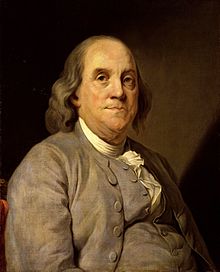
BenFranklinDuplessis.jpgStudents walk into an eleventh grade history classroom in an American high school.  Today they are learning about the Declaration of Independence, and how the US won independence from Britain. The teacher instructs for ninety minutes, using the history textbook and the Declaration of Independence as a document-based study.  Afterwards, some of the students walk down the hall to their English class.  In English they are studying the Autobiography of Benjamin Franklin. However, this instruction is completely separate from their related studies in their earlier class.  A few students make connections on their own, but most are just trying to get through the long passages and don’t even realize the significant relationship.  These students are missing the connections that a concurrent study of literature and history would allow for—learning in context. History should be learned through this concurrent study by using traditional readings and literature to gain greater understanding of the events of the past.

Traditionally, history is taught through textbooks and the writings of scholars.  These scholars and writers use newspapers, speeches, and other fact based primary sources to compile a clear picture of what actually happened.  This big picture allows for the reader to make judgments about the people involved and to ask questions as to their motivations. These texts are usually written in an objective manner, which allows the reader to not be influenced by the writer’s personal views.   By reading a third person narrative, the reader gains knowledge of the event.

Reading a piece of literature based on historical events also allows for learning. These pieces of literature can come in historical-based fiction and first person narratives.  Historical-based fiction often requires the author to research the historical events to create the setting for the characters that they will create. While the characters are not actual people, when based in a historically accurate scene, the characters create an idea of what it was like to be living in that time period.  First person narratives are usually written in the form of autobiographies, memoirs, etc. These narratives serve as a view to what it was really like to live there.  By reading these different types of literature, the student can learn more about the historical event, because the reader experiences the event—almost first hand.  As we read a story, we put our own view into the story, which creates a text-to-person relationship.  These text-to-person relationships allow for learning to be more permanent in a student’s mind.  First person narratives also allow for anecdotes, while third-person historical narratives do not.  These anecdotes allow for a student to remember the events with more clarity.  These stories give life to the history, because we can picture what happened a long time ago even though it may be foreign to us.  With these connections, a student can learn from a first person narrative or a historical fiction novel.

Thure de Thulstrup - L. Prang and Co. - Battle of Gettysburg - Restoration by Adam Cuerden.jpgHowever, just learning from a history textbook or just learning from a piece of literature leaves holes in the knowledge of the subject.  These two genres need to be used together to create a complete package. Learning from a history textbook gives historical context to the literature.  If one reads The Killer Angels by Michael Shaara, (a historical fiction novel about the Battle of Gettysburg during the Civil War) and has never heard of Gettysburg, he/she might be lost. However, if the student reads The Gettysburg Campaign: A Study in Command by Edwin Coddington, he/she now has a context to read a great piece of literature in.  Overall, the student now has a very clear picture of what happened at Gettysburg and a wealth of knowledge of the events that transpired there.

In addition, reading first person narratives along with scholarly based narratives, allows for the facts to have a backing. Scholarly based narratives, while often making attempts at unbiased writing, cannot help but to be influenced.  Sometimes, the government might even have a say in what records are erased or kept.  A first person narrative, though biased in its own right, serves as a witness.  No one can completely disagree with someone’s experiences.  By writing down memories, a permanent record is created that cannot be erased later on down the road when a dictator wants to “rewrite history” to fit what they need. As a result, first person and scholarly based narratives together create a great framework for the truth.

Overall, the students at American high schools should not be learning about the Declaration of Independence in one class and then turn around to learn about the Autobiography of Benjamin Franklin in a different class without at least a mention of the other class.  Greater understanding and knowledge can be achieved by reading historical literature and scholarly-based writing.
Monday, June 10, 2013

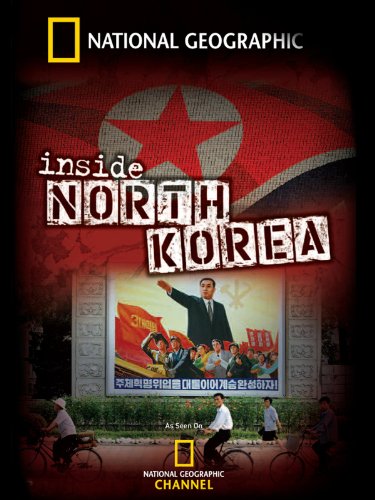
Movie Review: Inside North Korea

http://www.amazon.com/Inside-North-Korea/dp/B004HFKPOK
So I was thinking about something to review today and I wanted to share what we have been doing in class recently.  So not only is this a great movie review but it is also a great lesson plan idea for when you want an easy day.  This movie is done by National Geographic.  This follows Lisa Ling into North Korea as she films a documentary about a Nepal eye surgeon. He is going to heal 1,000 people of cataracts.  While they are there, they can film the culture around them.

So why do I like showing it in class? It is a great visual for the students of what North Korea is like.  They have trouble understanding the US tension with them and concern we have about the nuclear threats until they see this video.  They also have trouble understanding the truce between North and South and the DMZ.  If you don't show anything else from this movie except the clip of them at the DMZ then that would be worth it.  You can really understand what it is like there.

http://torrentbutler.eu/51376-national-geographic-inside-north-korea

Concerns to have as a teacher: So as always, every good teacher should preview the movie/clip they are showing in their class because you know your students best! But the biggest concern that I have had every time I show this video is creating a prejudice against the people of North Korea.  I emphasize with the students that we don't know how much choice the people of North Korea have so they might not really "hate" us.  I also emphasize difference of culture and though we view them as "strange"/"odd", they might find us strange and odd too. So we talk about accepting diversity when we watch this movie.

Another thing to keep in mind too is that this movie is now dated.  It was created before the death of Kim Jong Il, and his son is now the third dictator of the country--Kim Jong Un.  (Not to be confused with Kim Il Sung the original dictator) Getting this straight in your head and student's is also really helpful for when watching.

While Watching: I usually have a set of nine questions that I wrote for my students to answer.  They get a lot out of just watching and asking questions so sometimes I have them just respond to the film at different points too with questions and statements.  It is about an hour long so great for a classroom but usually we end up watching in about an hour and a half because I pause and clarify things, answer questions, and ask questions.

Oh p.s. I first just showed this to my US History classes because of the Korean War in US History class.  However, I recently showed it in all of classes with the World History spin with communism, Government spin of foreign policy, and World Geography spin of the theme place/region.  Overall,  it is a great way to connect current events with history too.

Sunday, May 26, 2013

Day 26: Critical Thinking v. Analytical Thinking

So today's prompt is actually a lot of what I have done on this blog before
Something you read online. Leave a link and discuss, if you'd like.
So totally stole this from the article!
Because I do a lot with my LessonCloud about teaching....lesson plans, education policy etc.  You know where I find most of my articles that I read about is actually Twitter.  A lot of people retweet articles or tweet their own articles that they have written.  The key to a good article to tweet?  A good title! (Feel free to follow me on Twitter here)

This article is called Teaching Students to Dig Deeper (very catchy I think).  It actually turns out to be a blog post about this guy's book....which he actually convinces me that I should maybe look into buying it. He talks about how a lot of people mix up critical thinking with analytical thinking or give them the exact same definition. This article asserts that in order to "dig deep" or thinking critically....students have to do analyze it first.  Once they understand their subject then they can think critically about it.

My question for my fellow teachers...which is why this guy wants you to read his book...is how do you give students the opportunity to follow these steps?  What real-world scenarios can we give them that they can solve and think critically about?

P.S. I really should update my tabs!

Monday, April 22, 2013

S is for Social Studies


I currently teach English and Social Studies at my school...but my number on love is Social Studies.  I feel that it is really important for students to understand the world around them.  World Geography starts them off with a great foundation--you need to know where everything is!  World History continues this foundation by allowing us to explore how civilizations started/ended/interacted.  United States History gives us more information about the country that we live in, how our country came to be, and what still influences our present.  Government class gives us the ins and outs of how our government system works, other country's systems, how we participate, and what rights we have as citizens.  

I always tell my students that it doesn't matter if you remember all the dates of every little thing...what matters is that you get the big picture and know the important stuff! My biggest goal is that if Jay Leno comes up to them on "Jaywalk" they know the answers!  We are teaching people with productive citizens...and that is my main goal.

I am often asked, "What is your favorite part about Social Studies?"  My passion is US History and Government.  I love learning more about our country...it gives us a sense of identity.  I love the stories of the people who came before and set up the country that we lived in.  They learned a lot through mistakes--whether they did anything with them is for us to learn too!  

Did you enjoy Social Studies classes in school or did you absolutely hate it?

Friday, April 12, 2013

K is for Kimberly

So...maybe I'm just lame....but I had trouble thinking of a good word for K today. I had lots of ideas but no real winner. Then I thought of the fact that the A to Z Challenge is suppose to help other bloggers to learn about each other.  So today I will give you some more information about me...through an "I am Poem"

This week for National Poetry Week in World Geography and World History we talked about the theme of "Impact of the Individual" and did these poems about different influential members in history.  I thought about having them do themselves....so I'll do one for myself instead. For the format go to Read Write Think. Though actually this is a different format than we used in class.

I am organized and smart.
I wonder where I will be in a year.
I hear my to-do list in my head.
I see the day that is not so busy.
I want to feel successful.
I am organized and smart.

I pretend that I have a clean house.
I feel the feelings of inanimate objects.
I touch student's minds.
I worry that I will just coast though life.
I cry for hopeless matters, because there is really nothing we can do.
I am organized and smart.

I understand that even though I'm organized, I am really messy in other places.  (However, I don't understand why).
I say effort is required in everything.
I dream of the day that motivation is easier to come by.
I try to get my work done.
I hope for the day that I feel like I was really really accomplished.
I am organized and smart.

Friday, March 8, 2013

Five Favorite Front-Page Features #10

Thank you http://www.teachenglishtoday.org/index.php
/2011/11/putting-the-daily-newspaper-to-work/ 

for the picture
So....on Monday and Wednesday next week I will be talking about current events in my Social Studies classes at Cedar Ridge Academy. I will be covering all of these topics in class with videos and articles.  Fellow teachers can feel free to steal!!

5. Real-Life Fillibuster--Rand Paul made history by talking for 13 hours.  See CNN Student News--which is a great source for anything current event.  http://www.cnn.com/2013/03/07/studentnews/sn-transcript-fri/index.html 

4. White House Tours Cancelled--I will be talking to my students about the sequestration and using this as an example.  For me this was just a little bit much....we could cut something else seriously. Like that dinner the President and Republicans went to? For info about sequestration go to article here: http://www.cnn.com/2013/02/06/politics/cnn-explains-sequestration and the CNN clip here: http://www.cnn.com/2013/02/28/studentnews/sn-transcript-fri/index.html

3. Hugo Chavez dies--This might change a lot about our relationship with Venezuela..or it might not..or it might change oil prices....or it might change the region.  Either way students need to know what is going on.  Watch http://www.cnn.com/2013/03/05/studentnews/sn-transcript-wed/index.html for the original annoucement and this one http://www.cnn.com/2013/03/06/studentnews/sn-transcript-thu/index.html which goes into the oil idea in Venezuela

2. TSA changes knife requirements--This one CNN Student News isn't actually messing with so I am going to show an ABC video http://abcnews.go.com/WNT/video/tsa-pocket-knives-airlines-rules-18661602?tab=9482930&section=1206853&playlist=18603342

1. North Korea sanctions--Great time to talk about the U.N. and how it works...we'll see if these sanctions work.  http://www.cnn.com/2013/03/07/studentnews/sn-transcript-fri/index.html 

Monday, March 4, 2013

March UCSS Conference

Teaching at Cedar Ridge Academy in Roosevelt, Utah, I sometimes feel out of the loop a lot from the Wasatch front--I teach in my departments alone and then there is the rural aspect.  It takes a lot more planning to get us involved.  I think we do a good job of taking advantage of things though as our Facebook page and blog page show. (P.S. Go like our Facebook page please---it helps us be more searchable).  So I plan on attending this conference every six months.  UCSS stands for Utah Council for Social Studies teachers, which I am a proud member of.  (P.S. Follow them here on Facebook and on their blog).

Biggest reasons to go to a conference (at least for me) are #1. the interaction with fellow teachers and #2. ideas for my classroom. So I went to three different session--one that focused on U.S. History, another that focused on World Geography/World History/Government/U.S. History, and another that focused on World History/Government.  That was the great thing about the sessions that I went to this time--I teach everything...so being able to deal with everything was great.

My favorite all-time session was with the teachers from Diamond Fork Junior High.  They have worked with their department and made huge strides in cohesive teaching across the grades.  I loved what they do with story-telling and teaching concepts like the 5 Themes of Geography, three branches of government, and types of government.  This idea of story-telling brings me to the close second: Dr. Crowe and Dr. Nokes--they talked about teaching history in context and with novels.  This really sparked my ideas to write historical fiction more that teachers can teach in their classroom as Dr. Crowe has done.  The close third with my favorite sessions was with Dr. Brown--she is a smart smart women.  I saw her last time so she didn't get the favorite spot because she was really favorite last time.  I love her Russia stories and her clear way of explaining the difference between communism, socialism, and Stalin's version of socialism (fondly known as Stalinism).

If you ever get a chance to go to a UCSS conference...totally do it!!!

The official logo of UCSS