Showing posts with label education policies. Show all posts

Monday, August 5, 2013

Teach History With Literature

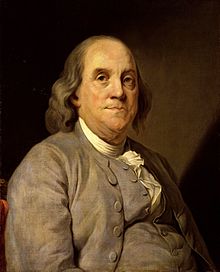
BenFranklinDuplessis.jpgStudents walk into an eleventh grade history classroom in an American high school.  Today they are learning about the Declaration of Independence, and how the US won independence from Britain. The teacher instructs for ninety minutes, using the history textbook and the Declaration of Independence as a document-based study.  Afterwards, some of the students walk down the hall to their English class.  In English they are studying the Autobiography of Benjamin Franklin. However, this instruction is completely separate from their related studies in their earlier class.  A few students make connections on their own, but most are just trying to get through the long passages and don’t even realize the significant relationship.  These students are missing the connections that a concurrent study of literature and history would allow for—learning in context. History should be learned through this concurrent study by using traditional readings and literature to gain greater understanding of the events of the past.

Traditionally, history is taught through textbooks and the writings of scholars.  These scholars and writers use newspapers, speeches, and other fact based primary sources to compile a clear picture of what actually happened.  This big picture allows for the reader to make judgments about the people involved and to ask questions as to their motivations. These texts are usually written in an objective manner, which allows the reader to not be influenced by the writer’s personal views.   By reading a third person narrative, the reader gains knowledge of the event.

Reading a piece of literature based on historical events also allows for learning. These pieces of literature can come in historical-based fiction and first person narratives.  Historical-based fiction often requires the author to research the historical events to create the setting for the characters that they will create. While the characters are not actual people, when based in a historically accurate scene, the characters create an idea of what it was like to be living in that time period.  First person narratives are usually written in the form of autobiographies, memoirs, etc. These narratives serve as a view to what it was really like to live there.  By reading these different types of literature, the student can learn more about the historical event, because the reader experiences the event—almost first hand.  As we read a story, we put our own view into the story, which creates a text-to-person relationship.  These text-to-person relationships allow for learning to be more permanent in a student’s mind.  First person narratives also allow for anecdotes, while third-person historical narratives do not.  These anecdotes allow for a student to remember the events with more clarity.  These stories give life to the history, because we can picture what happened a long time ago even though it may be foreign to us.  With these connections, a student can learn from a first person narrative or a historical fiction novel.

Thure de Thulstrup - L. Prang and Co. - Battle of Gettysburg - Restoration by Adam Cuerden.jpgHowever, just learning from a history textbook or just learning from a piece of literature leaves holes in the knowledge of the subject.  These two genres need to be used together to create a complete package. Learning from a history textbook gives historical context to the literature.  If one reads The Killer Angels by Michael Shaara, (a historical fiction novel about the Battle of Gettysburg during the Civil War) and has never heard of Gettysburg, he/she might be lost. However, if the student reads The Gettysburg Campaign: A Study in Command by Edwin Coddington, he/she now has a context to read a great piece of literature in.  Overall, the student now has a very clear picture of what happened at Gettysburg and a wealth of knowledge of the events that transpired there.

In addition, reading first person narratives along with scholarly based narratives, allows for the facts to have a backing. Scholarly based narratives, while often making attempts at unbiased writing, cannot help but to be influenced.  Sometimes, the government might even have a say in what records are erased or kept.  A first person narrative, though biased in its own right, serves as a witness.  No one can completely disagree with someone’s experiences.  By writing down memories, a permanent record is created that cannot be erased later on down the road when a dictator wants to “rewrite history” to fit what they need. As a result, first person and scholarly based narratives together create a great framework for the truth.

Overall, the students at American high schools should not be learning about the Declaration of Independence in one class and then turn around to learn about the Autobiography of Benjamin Franklin in a different class without at least a mention of the other class.  Greater understanding and knowledge can be achieved by reading historical literature and scholarly-based writing.

Thursday, June 27, 2013

Teaching Pet Peeves

So, as a teacher, I have gathered quite the list of things that seem to happen all the time and shouldn't.  I have found all of these on Pinterest.....so thanks for the inspiration!

This one is seriously soo true....at our school they are usually gone in a week!
http://so-relatable.tumblr.com/post/30249351326
No matter how many times I go over this....they still don't remember!
http://media-cache-ak1.pinimg.com/originals/86/98/9f/86989fcb9fc61d814021023ca53c3b86.jpg
Then there are things that I wish people would remember like.....

Money is nice....and yes I wish I made more.....but that's not why I teach

http://www.keepcalm-o-matic.co.uk/p/teachers-not-in-it-for-the-income-in-it-for-the-outcome/
And that we aren't just teachers.....what we do affects them!
Best #Education quotes #highered
No link....Pinterest link broken :(

And this is why I need books in my school all the time despite what people might say!!

https://fbcdn-sphotos-e-a.akamaihd.net/hphotos-ak-prn1/1043990_206009959522705_1490850759_n.jpg

Wednesday, June 19, 2013

Are Grades Important?


I read an article on Education Week today that seemed to discuss this very same idea.  Now I just got done reading the comments from everyone on the article, and wow.  People have a lot of different opinions.  I really don't like confrontation on the Internet. And these people sound belligerent so I am not commenting in the box.  But it got me thinking about how we doing grading at our school.  We still do grading, as I'm sure everyone here is aware.  And it is still very subjective with moments of objectivity just as every other teacher.  However, we do focus on competency and mastery. 


How do we do this?  We make sure the student knows the material.  Cs and Ds don't fly anymore....they just get As and Bs.  Most of our students have just "done what they had to" and tried to just barely pass before.  By actively creating these guidelines, the students reach for a higher standard. I saw comments on this article about schools that just let students retake as many times as they want so kids don't even try the first time.  WE also have things against that in the fact that they can only really take the tests twice until they need to go back and prove mastery to the material that they are being tested on.

But the cool thing to me is that the power of the letter grade gives these students confidence to go on to their next school with more confidence whether that be in college or another high school. I know that they are actually having to learn something to go through what I make them do :) unlike other schools where they could just skate by.  So it is definitely something that is worth considering in the constant debate of education reform.

Picture courtesy of: http://www.legaljuice.com/2011/07/post_245.html

Wednesday, June 12, 2013

Shakespeare Plus Autism


So my only actor friend (well at least that I know of...there might be some high school friend that acts but I clearly don't talk to them that often) shared this article on Facebook [yes you Katie :)] The article is called "The connection between Shakespeare and autism" And we taught Shakespeare together once for a MAGNIFICENT summer at Cedar Ridge Academy.  So of course I clicked on it because I want to know what is out there. This is actually quite the interesting article.
Our school does not teach highly autistic students, but we do see students on the other end of the autism spectrum (like NLD and Asprerger's).  As this article points out, with these students you are not going to immediately think of Shakespeare. But I have seen students that would have NEVER tackled Shakespeare on their own, take it and run with it.  They immerse themselves in the language and let them try it out and guess what they are getting at--and suddenly they are not scared and they can handle it.  


So go check out the article...what Shakespeare play would you try with students that aren't great with language?  Hmm....what about with ESL?

Thank you to shakespeare.mit.edu for the picture which is also where I get my copies of plays when I do it in class.  Printing them for a small class like mine is cheaper than buying books.

Sunday, May 26, 2013

Day 26: Critical Thinking v. Analytical Thinking

So today's prompt is actually a lot of what I have done on this blog before
Something you read online. Leave a link and discuss, if you'd like.
So totally stole this from the article!
Because I do a lot with my LessonCloud about teaching....lesson plans, education policy etc.  You know where I find most of my articles that I read about is actually Twitter.  A lot of people retweet articles or tweet their own articles that they have written.  The key to a good article to tweet?  A good title! (Feel free to follow me on Twitter here)

This article is called Teaching Students to Dig Deeper (very catchy I think).  It actually turns out to be a blog post about this guy's book....which he actually convinces me that I should maybe look into buying it. He talks about how a lot of people mix up critical thinking with analytical thinking or give them the exact same definition. This article asserts that in order to "dig deep" or thinking critically....students have to do analyze it first.  Once they understand their subject then they can think critically about it.

My question for my fellow teachers...which is why this guy wants you to read his book...is how do you give students the opportunity to follow these steps?  What real-world scenarios can we give them that they can solve and think critically about?

P.S. I really should update my tabs!

Thursday, May 23, 2013

Day 23: What Has Life Taught Me?


So today's prompt....
 Things you've learned that school won't teach you
Honestly the first thing I thought of is what school lied to me about...so I think I am going to go with that.  As teenagers/children, we are really taught that college is the goal.  Do your schoolwork, get good grades, so you can get into a good school. For some students this is hard to get behind, for me I was just fine because I wanted to go to college.

I got good grades in high school...applied to nine schools and got into all (though one was a wait list). I picked BYU because of the money and it just made sense.  I wanted to be a teacher, and going to college is required for that.  However, what NOBODY told me is that with the amount of money that you spend on college tuition, books, housing, food etc., if you just pick certain careers you could actually not go to college and make more than I do.

You know how I know this...my husband works at a credit union.  If he went full time plus his current typical bonus, he makes more than me! And he doesn't have a bachelor's degree (yet)...how come I went to college?! Because everyone said that was how you got a decent job to make a decent amount of money...lies!

Now, I want to be clear.  I am glad I went to college--I learned SO much and LOVED the experience. I encourage my students to go to college if they have the desire...and for some careers you don't have a choice.  But I hope that we stop telling people that college is EVERYTHING.   I just really wonder if I had known earlier on if I would have changed careers.  Today, I really can't see myself doing anything else because I have wanted to be a teacher for SO long!

Monday, May 6, 2013

I'm A Teacher....What do I not do?

Feeling less weird and have more of a brain today so it should be a bit more coherent!

Today's prompt:
If you couldn't answer with your job, how would you answer the question, 'what do you do'?
Wow this is such a load question! I am a mom, a sister, and a nurturer on one hand.  On the other hand, I am the instructor, Alex Trebek, and fountain of all knowledge.  On the third hand (because teachers need so many sides!), I am the person who inspires, helps, and listens.  And on the fourth hand (it works better if it is balanced on both sides of me), I am the enforcer, the boundary holder, and the "tough" guy!

As I read this prompt I thought of many little inspirational tidbits that I have found on Pinterest before.  I love how I'm getting to add more to my Pin It Do It list! And these are great for any teacher or supporter of teachers.

Original Pin: http://pinterest.com/pin/128915608055956184/
Original Link: http://www.flickr.com/photos/venosdale/6902965047/
 I love this because it really lists what I teacher does....we try to do so much every day!

Original Pin: http://pinterest.com/pin/128915608054587433/
Original Link: http://i.imgur.com/pPywi.jpg

It would be nice if everyone got this...maybe I'll would get paid more!

Original Pin: http://pinterest.com/pin/128915608054464630/
Original Link: http://secondarysolutionsblog.com/2012/02/what-teachers-really-do/
Everybody has seen these memes...I think the best part is unless you have been at "really do" part is what makes it funny.  Because really the stereotypes and mind games we play are so true.  The first frame is why I think many of us become teachers.  The second frame with Einstein is the only one I question.  The society frame sure feels like it as we lead up to summer.  The kids one....yes because they really just see us some times as the people that just don't care about him.  Sometimes I wish that I taught in a movie and just inspired--it is one of the reasons why I became a teacher in the first place. But really...there are moments where I get as overwhelmed as that last picture shows.

This one does not need a response...it speaks for itself.
Original Pin: http://pinterest.com/pin/128915608054464626/
Original Link: http://busyteacher.org/6967-poster-im-so-much-more-than-just-a-teacher.html
Happy Teacher Appreciation Week!! Thank a teacher :)

Wednesday, April 24, 2013

U is for Under-appreciated Teachers


U is for under-appreciated teachers today.  I have been telling lots of people that this is a hard time for teachers.  The education world is trying to change--and go in six million different directions.  I just hope that everybody is actually learning something somewhere!  I saw this article from Huffington Post a little while ago. The purpose of his article is the people shouldn't become teachers.  This is one of my favorite quotes from the article:

Teachers are being told over and over again that their job is not to teach, but to guide students to learning on their own. While I am fully in favor of students taking control of their learning, I also remember a long list of teachers whose knowledge and experience helped me to become a better student and a better person. They encouraged me to learn on my own, and I did, but they also taught me many things. In these days when virtual learning is being force-fed to public schools by those who will financially benefit, the classroom teacher is being increasingly devalued. The concept being pushed upon us is not of a teacher teaching, but one of who babysits while the thoroughly engaged students magically learn on their own.
Sometimes it really does feel like that. I spend a lot of my day grading and instructing students on appropriate behavior not actually teaching them about a great story in literature or history.  We all have a favorite teacher because they cared and actually taught us something.  I worry that the next generation won't have a favorite teacher.  Then....really we won't have many becoming teachers because they aren't inspired.

Go read the article--he writes so much better than I do!

Thursday, April 4, 2013

D is for Differences in Learning

I thought it might be time again for another education op-ed type thing. One of the things that I hear a lot as a teacher---especially in my particular school is from parents and sometimes students--"My son/daughter/I have learning differences."  They usually say it in this whiny voice with an intent to look for an exception or a teacher to spend ALL of their time with them and ignore all the other students that they have.  I have taken to saying something like, "That's nice, so do I."

Parents will usually pause and the kids will stare at me like, "Really you are a teacher and super smart?!"  I continue talking about how everyone learns differently.  If we all learned the same, we would all have the same personalities, and then we might as well be robots.  We have to figure out what helps us to learn best--but we can't use it as an excuse.  I know that I learn well with visuals and sounds--so when I am learning something I figure out how to make that happen.  That is what our students need.

As parents and teachers we want to help our students to be independent.  So, don't let them use the fact that they are totally different from everyone else as an excuse--use it to empower them.  You learn differently?  Great! What are you going to do to help yourself?  How can you advocate for yourself?  Just because you have an IEP does not give you license to not work and it definitely does not allow you to just sit back and not work hard.  Will you have to work hard then another student because of that?  Yes it is possible, but they have to work hard at something else that is easy for you.

Be okay with the fact that we are all different.

Wednesday, March 27, 2013

Teachers Have the Best or Worst Job?

So...I am sure I have talked about this on here before but being a teacher can be really hard work but also very rewarding. In the last couple of days I have seen two articles from other people's perspectives/work about this very thing.

This first one was an op-ed piece from the Salt Lake Tribune written by an actual teacher in Salt Lake asking, "Why teach?"   Her big thing is all against testing...which I am BEYOND thankful that I really don't have to do.  Yet another reason to stay where I am.  But the point that she brings out is that we feel a lot of pressure as teachers...I get that at my own job.  She focuses on administrators and legislators but it's parents too.  We expect our kids to be geniuses--set the bar high but don't expect teachers to do all the work.  So how about we all give each other a break--it will be waaay good for our stress levels!!

Go read it here: http://www.sltrib.com/sltrib/opinion/56010884-82/students-teachers-tests-teacher.html.csp

The second one was an article from the New York Times that reports the findings of a Gallup poll that looked at well-being.  They said, "teachers ranked above all other professions in answers to questions about whether they “smiled or laughed yesterday,” as well as whether they experienced happiness and enjoyment the day before the survey."  So this is how the article decides that maybe all of this disgruntled stuff is just hype. Well...this is what I have to say about that.  As teachers in order to keep going and keep moving forward we have to find the good in the day.  I try to actually consciously do that.  So yes we are going to try to find a way to smile or laugh--it is the nature of who we are.  So bottom line: you have to ask the right questions to get the hype that we will give you.  

Go read this article here: http://www.nytimes.com/2013/03/28/education/in-poll-on-well-being-teachers-rank-high.html?smid=tw-share&_r=0 

Cedar_Ridge_Academy_Therapeutic_Boarding_School
See even I found a reason to smile....and give out a trivia question.
Check it out on our Cedar Ridge Academy Facebook page

Sunday, March 17, 2013

My Response to CNN: We are ALL a Team


Click through the gallery to see some of the best responses to the following <a href='http://www.facebook.com/cnn/posts/10151522264786509' target='_blank'>prompt posted on Facebook</a>:<!-- -->
</br>"The one thing parents/teachers <a href='http://www.cnn.com/2011/09/06/living/teachers-want-to-tell-parents/index.html'>really need to know</a> is _____." Some comments have been edited for length and clarity.So this weekend, I saw this article from CNN about the 10 things parents and teachers should know about each other.  I have talked on here before how parents and teachers should be a team, and that parents shouldn't demand things of teachers--just as teachers shouldn't demand things of parents. And again...these opinions are mine alone, but I wanted to respond to this article.
Briefly, this article is a response to an article that they did probably about a year ago about what teachers want to tell parents.  I saw that article then and liked it enough to share it on Facebook.  To me, this new article discusses that parents and teachers are on the same page--some of the time.  They give a couple of quotes--some I agree with and some that I don't. As the article asks at the end: "What do you think about this list and what would you add?" I will do a list of three quotes from the article with my own commentary.


Quote #1 from the article states:
"Parents need to know we're in it for the kids; obviously not for the money," said Facebook user and Florida teacher Cindy Hoffman. "We're in a partnership, trying to do the best for the children as possible. Please don't treat us as adversaries."

I agree because as I have mentioned before, no teacher is in it for the money.  If parents know that we are a team--things go so much better.  Students drive the train (especially in high school) while the parents and teachers work as the staff on the train to help support the engineer.

Quote #2 states:
"As a teacher (oh yes, I am both) I want parents to stop blaming teachers and start working with us," Williams-Solod said. "We can't fix everything, but remember we are humans and we aren't perfect. Also, teach your kids to respect us."

I like this quote because it comes from a teacher-parent.  Sometimes teacher-parents are the worst--because we know what we would do as a teacher for our own kids.  But I think this mom hits the nail on the head--teachers are only human.  And one thing that I have to remind myself of everyday is that parents are only human too. I deal with a lot of kids who might not be in the situation that they were if there were different choices made in their upbringing.  So...again we are a team.

Quote #3 states:
"ADHD is not an excuse; it is an explanation."--Melynda Hartley Johnson, parent

I disagree with this quote to a certain extent. I agree that in some cases ADHD is a real thing--and something that the student needs to learn how to overcome.  However, I think that it can be used as an excuse even when it is a real thing.  No kid that is in a wheelchair or has glasses or any other visible difference says that they can't do something just like everyone else.  They figure out how they can do it their way.  That's what I as a teacher wish the parents that come to me with, "My kid has ADHD." would understand.  I wish I could hear, "My child has ADHD; can we help him learn despite of that?  I want him/her to be able to reach their potential and not be a kid defined by this."  That's really is the biggest thing--we can't define our kids by an explanation--they have to define themselves by what they CAN do, not what they CAN'T do.

Monday, March 11, 2013

Does Teaching=Results?


I saw this quote the other day about teachers.  I really liked the quote and the background is pretty too.  One of the things that I think education suffers from is a lack of understanding that our jobs are hard too.  Politicians try to put it in a box, or make it so that we have to meet certain standards.  What they don't get is that lawyers, doctors, and dentists can fit into that results box because they tailor their results getting to the individual case.  They have a main objective--save the life, win the case, etc...yes there are a variety of ways to get there.  And doctors and lawyers will agree on some of the best practices to get there and others will disagree with those practices saying that another kind works better.  But the patient/client/world doesn't really care as long as the cancer is cured or the bad guy goes to jail.  In the teaching world, our results are not that simple to see.  We all agree on best practices and we all disagree on best practices.  But the trick is knowing that the student learned and that the teacher did their job.  We don't know that as instantly and we don't know that for sure---mostly because like the quote points out--everyone learns differently.  That's why people try to put testing on our students and there is so much pressure to standardized everything everyone learns.  I wonder what it would have been like to teach in the days of the one-room school house, where everyone was grateful for the education that they did get.  Only people questioned the teacher's behavior methods and treatment of their students then--not whether their kid was learning or not. I don't know, maybe I'm just crazy...but what made our society think that teachers should be so results oriented.

Saturday, March 9, 2013

The World + College Today= Not Sure

So you probably saw my Facebook picture here you would have figured out that Cedar Ridge Academy had their parent workshop this week. At this workshop, students and parents spend time together on their relationship and learning together about how to improve their lives.  The school usually does at least one class about academics.  We talked about how parents can support their student academically.  I talked specifically about the roles that students and parents play...maybe I will talk about that more specifically later on.  Today I wanted to talk about what our guidance counselor's section was on--how parents support the next step whether that be college or career.

Afterwords, a parent pointed out what the world is really becoming...a college degree doesn't get you anywhere anymore.  I just barely saw this commercial on the television...


Unfortunately college does not give you the security and money that this commercial implies.  Brian just got promoted--YAY!! I am excited for him and he really enjoys his new job.  And he is very excited about the pay raise and bonuses that come with this pay raise.  However, the weird thing to me is that Brian works part-time at a credit union while getting his college degree, but if he worked full time he would make more than me.  It makes it really tempting to not finish that degree for him--but he does want to get into his field.  For me, I wonder sometimes why I worked hard at my degree.  

Now don't get me wrong, I love my job and I especially love teaching.  And I knew that teaching doesn't pay that much from the beginning (so even if I switch schools it won't make a difference)...but am I a little bit strange to think that a teacher with a college degree should make more than a loan officer without one? 

So what's my bottom line---something should probably change--but how?

Tuesday, February 26, 2013

The Spirit of Collaboration...Needs Understanding

One of the things that has become a new role for me at work is Lead Teacher.  In a way, I am the teacher that everybody goes to..but with as small of a faculty that we have I am like the Assistant Academic Director.  It describes my job waay better and well lets just be honest it sounds cooler :).  Weekly, all areas of the program get together to touch base about students, plan for upcoming events, and figure out how to make things work better around the company.

Sometimes I walk out of these meetings feeling like we got nowhere, and other times I feel like things are going to be okay at my job and we are all working together.  But one thing that I have learned about these meetings is that everyone has to be willing to listen to the other side.  If I think there is an idea that will be perfect for the problem, and I suggest it sometimes it doesn't work for someone else.  This might be because there is a part of the picture that I didn't see because I am not in their shoes all the time.  The key is to listen when the other department expresses that and not to just bulldoze right over them.

So here's to good collaboration and no bulldozing--just try to understand!

Thank you to http://www.construction-machine.org/wp-content/uploads/2009/08/Bulldozer11.jpg for the picture

Thursday, February 21, 2013

The Bain of My Existence this Week...Grading

Ugh! I bet some teachers feel like this...but some times all I feel like is that I grade, grade, grade.  I knew that this is a frequent problem....especially for English teachers.  I knew this to the point that it was often a discussion with my fellow pre-service teachers in college.  The biggest thing that I got out of that was the fact that don't assign too much because you have to grade it...and don't assign something you don't want to grade.  However, my job is super unique in the fact that I don't assign the amount and I don't assign the work either.  With our online system the questions are randomly given to the student and the students work at their own pace.  So sometimes I feel like this....
From: http://macleodcartoons.blogspot.com/2009_10_01_archive.html

Or like this....
From: http://www.philosophyandlaw.com/2012/12/grading-student-papers-insanity.html
Bottom line: Exhausted and tired...so this is a fast post.  Off to grade!

Monday, February 11, 2013

Be Positive!

Today is going to be a rambling post...I'm sorry if these aren't the favorites...but I had an interesting experience today.  And to a certain extent it is something that I wonder if happens to a lot of teachers.  I ran into an old friend from work.  She and I knew each other about six months or so before she was let go by the company.  She did not and still does not agree with a lot of the decisions the company made. She was surprised to hear that I was still working for them, because of her negative feelings about it.  I was finally able to pull away from the conversation and get my grocery shopping done, but her words still bothered me.  And I have been thinking about it ever since...

People talk about how this and that needs to change in education. But I really think that of the biggest things that needs to change in education is the attitude of people about it.  We can't go beating up and putting  everyone down all the time--whether we agree on the decisions or not.  First of it is not healthy and second of all it is very toxic.  I felt just very yucky and disturbed by the whole conversation--and it is just not productive.

Sometimes it is hard to take the emotions out of the decisions that educators need to make, but I think that we need to say our piece and then deal with the problem rationally.  Because negativity, I think, will ruin some great teachers' careers.  I know for me the last few months with everything changing around me in the field, I have thought hard about leaving the field.  But I love teaching in my classroom, independent of everyone else, and honestly I don't know what I would do instead.

So I guess I send this cosmic thought out into the void....but I would challenge all of us to be a little bit more positive today, tomorrow, and the next day after that--because we sure need it around here.
I love daisies!! They are the happiest flower
Thank you www.smileyfaces.org for the pic

P.S. I made two "You've Got Mail" references...brownie points to who figures them out.

Tuesday, February 5, 2013

Teaching History Requires that Students Relate

I recently read an article from Education Week from the perspective of a history teacher that works with some sort of diploma recovery/adult-education program. As a result, these students have definitely never caught the spark of history that we all have.  The article talks about how the teacher relates what she and her student is talking about to relevant issues of the day.  I also love how she answers his questions without saying that there is not time to do so.

That is one of the things that I love about where I teach.  Because the regular curriculum that the students have covers everything, I know that they will eventually get there.  So, we can spend time on what the kids are interested in learning about, and what I am learning about.

Even though this is an English story from today---I think it still applies. We are currently starting a poetry unit, and we were going through some common poetry terms. I set it up with the kids that some of them might know them and they might not know others.  It opened up everyone up for questions, and I love it when I am scrambling to think of the answers to the questions that they ask.  They love it when I pull up Google on the projector and we go looking for the answer.  That is the type of inquiry that I love!


Thankfully we don't use chalk anymore!

Sunday, January 27, 2013

Technology and Students

I recently read this article called "Digital Immigrants Unite!" It is all about how students might know all about the social network sites and the video games but they don't know the power that technology has and how to use it smartly.  Students see it all as entertainment for them.  The whole thesis of his argument is that the students still need our help with technology.

I completely agree, and I think it is worse than some of us might think.  But what I consider simple troubleshooting on a computer can't be done by my students, I wonder how much we assume that they know everything about computers--or at least they should.  And you would be surprised how many of them don't know about the social networking sites either.  I would encourage schools to keep technology courses, because unless we make them use it--they won't learn how to do everything.

Thank you: http://therandomhomeschoolspot.wordpress.com/ 

Wednesday, January 23, 2013

Teacher Expectations

I saw an article today from Education Week that reviewed a research study about how teacher expectations can influence student achievement.  It states in the article that the fact that if teachers hold expectations for all students no matter what their income, race, etc. that the minority and low-income students perform significantly better.

I was not surprised by the fact that teacher expectations improve student achievement.  I see that everyday with my students.  The students that I work with do not do well in school, but I hold them to the same expectations that I would hold any "gifted" student.  These students rise to meet them despite the fact that everyone has said that they can't do it.  So the connection of the fact that minority and low-income students would do better with equal expectations makes sense.  If they are never expected to reach any higher than the stereotypes require them to, then they never will and/or they will think that they can't do better than that.

My firm belief is:
Thank you Pinterest for the cute way of displaying this....

We have to treat students as individuals---not as the group that they have been clumped into. So my question for today is, how do you keep expectations high for ALL your students?  The things that I do are:

  • Have the same expectation for everyone and I don't give anyone a break (though see below)
  • My fellow teachers know my expectations and help to back me up
  • I make sure that the expectations are reasonable for the student.  I hope that my students know that I do bend it toward their actual ability, but not until I know what that is.
  • I also show empathy for my students and spend time with them when they are struggling to understand the material, in which I have been known to give the occasional break.  The key is to not give them all the time or they will come to expect them.
What would you add to this list?

Tuesday, January 15, 2013

Grades are Earned, Not Punishment

Have you seen this?

Thanks: http://www.geeksaresexy.net/2011/02/12/bad-grades-1960-vs-2010-cartoon/
This went around Facebook for a long time, a while ago.  And the other day I saw this link: http://www.theatlantic.com/national/archive/2013/01/why-teachers-secretly-hate-grading-papers/266931/ which is an article explaining why teachers don't like to grade papers.  The author gives six reasons that made sense to me.  Today I was reminded of reason 7: parents expect you to give them the grade they think their student deserves based on the effort that they see, not what the kid earned.

This is on my mind today because I had a parent rudely tell me today what I had done wrong with his student's grade.  I don't want to be negative about it, but I do want to say a few things that I feel like all parents need to hear.

Dear Frustrated Parent,

Teachers (the good ones) have expectations for their students.  They make these expectations very clear, and to a certain extent these expectations are common sense.  We are not out to "get" your student, and we have a lot of better things to do then to come up with ways to trick your student.

If your student leaves questions blank, they will be marked wrong.  If your student puts down on an inaccurate answer, it will be marked wrong.  If your student does not follow the expectations, their grade will go down despite what they might get on tests.  It can also happen that way even if they spend a lot of time on their assignment.  I am willing to work with your student to improve your grade, but that is tricky to do if your student does not come to class or ask for help. So, I am not punishing your child--I am simply trying to teach them that they EARN their grade and to put in effort in all of their assignments.

In addition, if you come to me to advocate for your student that is one thing. I am happy to discuss that with you, because we both want what is best for your student. However, if you come to argue about what you think should be right instead of having an open mind about what might be my perspective, that is just insulting.  We don't blame doctors for the diagnosis they give us, and tell them it is their fault we are dying.  Why are you doing it to me? Please just let me do my job.

Sincerely,

Me